


ISP proxies and datacenter proxies are two of the most common proxy types, and picking the wrong one can waste money or get you blocked faster than expected. Both have their place, but they work differently and suit different use cases.
In this article, we'll explore how each type works, where they shine, and which one you should go with based on your needs.
How ISP and Datacenter Proxies Actually Work
Datacenter proxies come from commercial servers hosted in data centers. They are not tied to any real ISP or household, which makes them fast and cheap, but also easier for websites to detect and block since their IP ranges are well-known.
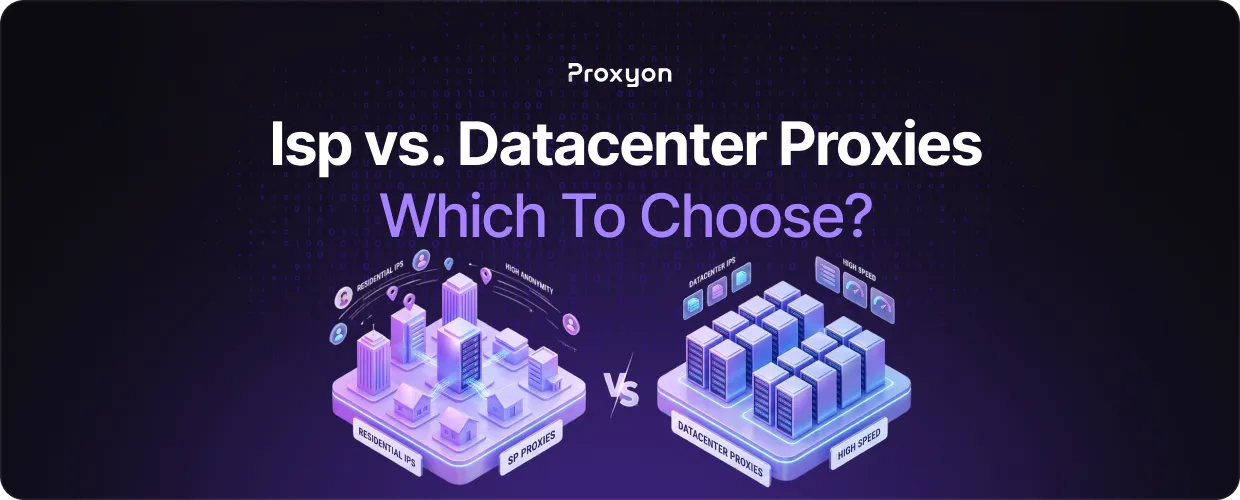
ISP proxies are a middle ground. They use IPs assigned by real internet service providers, but are hosted on a datacenter infrastructure. This means you get the speed of a datacenter proxy with IPs that look legitimate to target websites, since they are registered under real ISPs.
The core difference comes down to where the IP originates. Datacenter IPs are owned by hosting companies, while ISP IPs are assigned by actual internet providers, the same ones that assign IPs to home users. That single difference changes how websites treat your traffic entirely.
Which One Is Harder to Detect

Websites identify proxies by checking where an IP is registered. Datacenter IPs are easy to flag because they belong to well-known hosting providers like AWS or Google Cloud, and most anti-bot systems have their entire IP ranges blacklisted already.
ISP proxies are harder to detect because the IPs are registered under real internet service providers. To a website, the traffic looks like it is coming from a regular home user, not a server. This makes them significantly more resistant to detection compared to datacenter proxies.
That said, ISP proxies are not undetectable. If you send too many requests too fast from the same IP, you will still get flagged, regardless of how clean the IP looks. The proxy type gives you an advantage, but your request behavior is what keeps you under the radar long term. If you want to go deeper on avoiding blocks, check out how to do web scraping without getting blocked.
Which Proxy Type Should You Choose
It comes down to what you are scraping and what your budget looks like. Datacenter proxies are faster and cheaper, making them the right choice for targets that do not have aggressive bot detection. If you are hitting regular websites without heavy protection, there is no reason to pay more.
ISP proxies are the better option when you need cleaner IPs that are less likely to get blocked. They cost more than datacenter proxies but less than residential ones, so they sit in a comfortable middle ground for targets that flag datacenter traffic but do not require full residential coverage.
If you are unsure which to start with, go with datacenter proxies first. If you run into frequent blocks, switch to ISP proxies. There is no point paying extra upfront until you know the target actually requires it.
Final Thoughts
Datacenter proxies get the job done for most use cases and cost a fraction of what ISP proxies do. If your target has stricter detection, ISP proxies are the logical next step before moving to residential. Start with what fits your budget, test against your target, and upgrade only if you have to.