


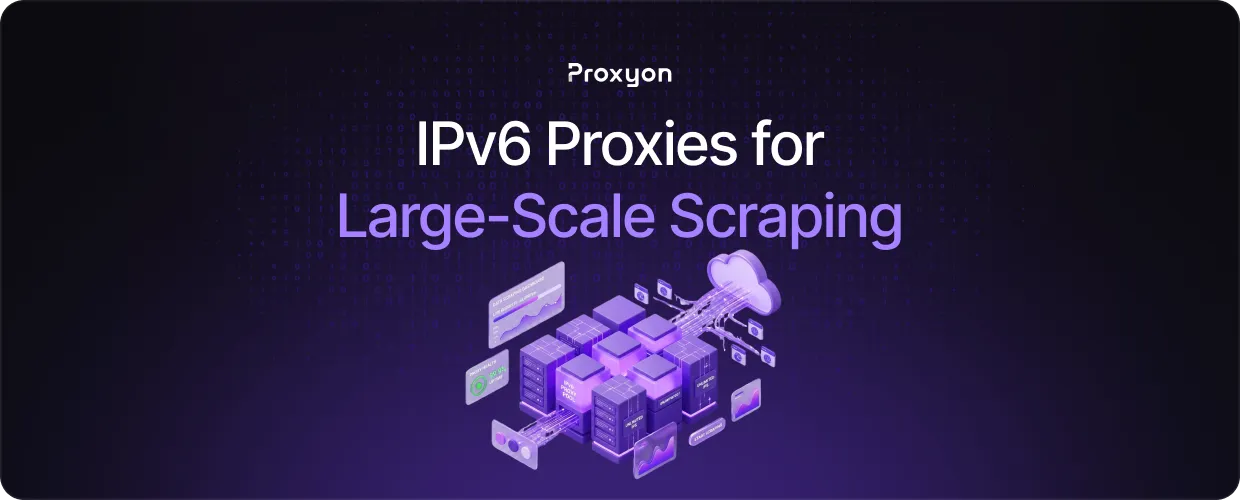
IPv6 proxies give you access to a massive pool of addresses at a fraction of the cost of residential IPs, which makes them a solid option for large-scale scraping. The catch is that not every target website supports IPv6, and if you do not know what you are doing, you will burn through addresses fast without getting much in return.
In this article, we will explore what IPv6 proxies are, how to set them up for large-scale scraping, and how to use them correctly to get consistent results.
How IPv6 Proxies Work for Scraping
Your request goes through an intermediary IP before it hits the target server. The difference with IPv6 is that the address space is enormous, so providers can offer thousands of unique IPs at a very low cost. Instead of paying for residential IPs to avoid blocks, you can rotate through a large pool of IPv6 addresses and achieve a similar effect for less money.
Each request goes out from a different address, so the target server never sees the same IP twice. The rotation logic works the same way as any proxy pool, either per request or on a time interval. The main limitation is that some websites only accept IPv4 connections, meaning your requests will fail or get rerouted. Before committing to IPv6 for a scraping project, check whether your target actually supports it.
Also Read: How to Scrape at Scale: Concurrency, Retries & Proxy Management
When to Use IPv6 Proxies and When to Avoid Them
IPv6 proxies make the most sense when you are scraping at scale and need a large number of unique IPs without spending much. They are a solid choice for web scraping, price aggregation, and data collection on sites that do not heavily scrutinize where traffic comes from.
Avoid them when your target only accepts IPv4 connections or runs advanced bot detection, since those systems look at far more than just the IP address. In those cases, residential proxies are the better option. IPv6 proxies trade detection resistance for volume and cost efficiency, so match the tool to the target.
How to Set Up and Use IPv6 Proxies the Right Way
Most providers give you a list of IPv6 addresses or a rotating endpoint you plug directly into your scraper. The most common mistake is sending requests too fast. Even with thousands of unique IPs, hammering a target server will get you blocked at the application level. Pace your requests and add delays between them.
Test a small batch of addresses before running a full job, since some may already be flagged. Tools like Scrapy or Playwright make it straightforward to swap addresses in and out. If your target starts returning errors mid-job, check whether it supports IPv6 at all. Switching to an IPv4 proxy for that target is faster than troubleshooting a setup that was never going to work.
Also Read: Rotating Residential Proxies Explained
Final Thoughts
IPv6 proxies are cost-effective for large-scale scraping on the right targets. Use them on compatible sites, pace your requests, and validate your addresses before running a full job. If the target does not support IPv6 or runs serious anti-bot systems, residential or mobile proxies are the better call.