


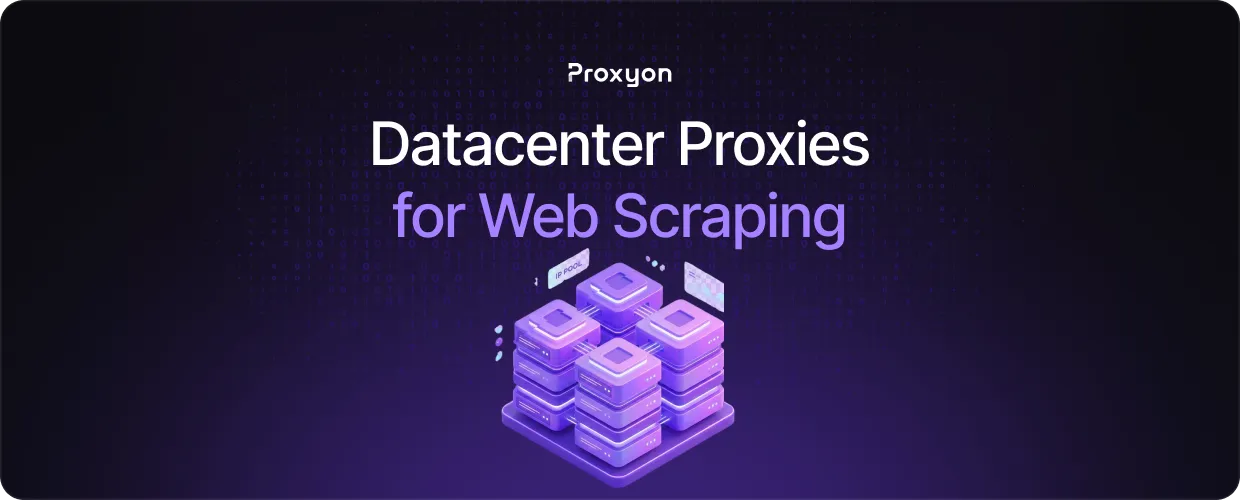
Datacenter proxies are the go-to choice for web scraping when you need speed and don't want to pay residential proxy prices. They're fast, cheap, and easy to set up. The tradeoff is that websites can detect them more easily, which means they're not always the right tool for the job.
In this article, we'll explore how datacenter proxies work, when they're the right choice for scraping, and when you're better off using something else.
How Datacenter Proxies Work for Scraping
Datacenter proxies route your requests through IPs from commercial servers rather than real households. The target website sees the datacenter IP instead of yours, letting you scrape without exposing your real address or getting cut off after a few requests.
Most setups pair datacenter proxies with IP rotation, meaning each request goes through a different IP from a pool. With a provider like Proxyon, rotation is handled automatically through a single endpoint; no manual switching required. The main edge over residential proxies is speed and cost. Datacenter IPs run on dedicated servers, respond faster, and cost significantly less per GB.
Also Read: Rotating Residential Proxies Explained
When Datacenter Proxies Work and When They Don't
They work well on sites without aggressive bot detection. Public data sources, smaller websites, and platforms without heavy anti-scraping measures are all fair game for pulling product listings, prices, or general web data at scale.
Where they fall short is on heavily protected targets. Sites like Google, Amazon, and LinkedIn cross-reference incoming traffic against known datacenter IP ranges and block matches immediately. No amount of rotation fixes this because the problem is the IP type itself, not the request frequency. For these targets, residential proxies are the better option since they use IPs assigned to real households, making them far harder to block.
How to Get the Most Out of Datacenter Proxies

The biggest mistake is sending too many requests too fast. Even on unprotected sites, which will eventually trigger a block. Pacing your requests and adding delays goes a long way. Make sure IP rotation is actually enabled before starting a large job, and match your user agents to real browser traffic; a request that looks like it came from a real browser is always less suspicious.
For most scraping jobs on unprotected targets, that's all there is to it. If you do hit a wall, that's the signal to switch to residential proxies rather than forcing datacenter proxies through a site built to block them.
Also Read: How to Scrape at Scale: Concurrency, Retries & Proxy Management
Final Thoughts
Datacenter proxies are a solid choice when the target site doesn't have aggressive bot detection. Match the proxy type to the target, rotate your IPs, and pace your requests. For sites that push back, residential proxies are the next step. Proxyon offers both starting at $1.75/GB with no subscription required. Deposit $5 and start scraping in minutes at Proxyon.