


TL;DR
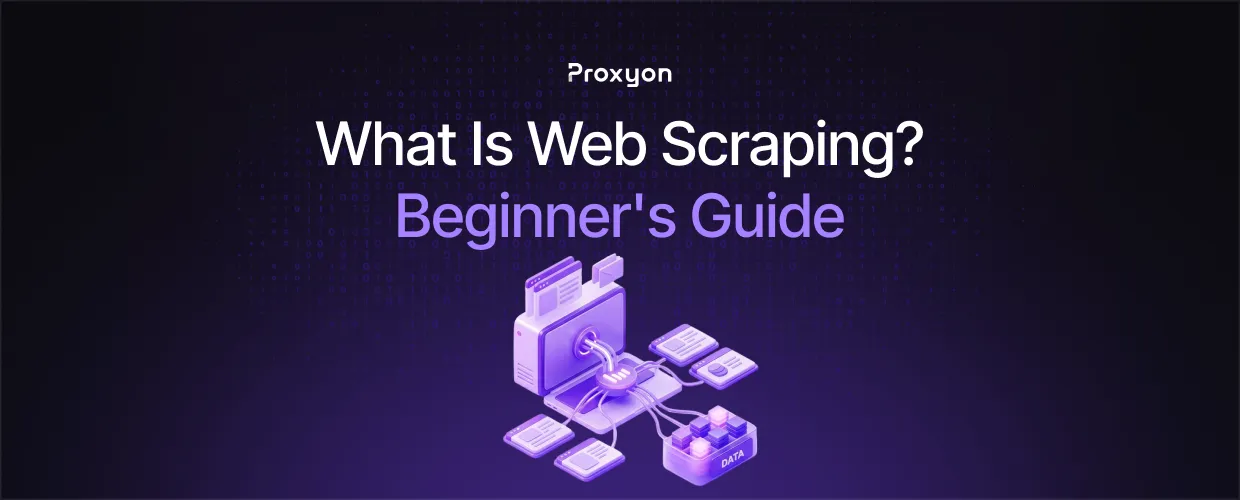
Web scraping is the automated extraction of data from websites. A script loads a page, pulls out what you need, and saves it in a structured format like CSV or JSON. Scraping public data is generally legal, but sites fight back with IP blocks, which is why serious scrapers rely on rotating proxies.
Every price comparison site, job board, and AI training dataset starts with the same thing: data pulled from other websites. Web scraping is how that happens. Instead of copying information by hand, a script requests a page, reads the HTML, and extracts the pieces you care about, like prices, titles, or reviews. In this article, we'll explore how web scraping works, what it's used for, whether it's legal, and the tools beginners should start with.
How Web Scraping Works
Every scraping job follows the same loop. The scraper requests a URL, the server returns HTML, and a parser digs through that HTML structure to find the target data. The output gets saved as CSV, JSON, or into a database. Larger projects add a crawler that discovers URLs by following links, then hands each one to the scraper.
The catch is that websites don't always cooperate. Rate limits, CAPTCHAs, and IP bans are standard defenses, and once your IP gets flagged, every request is rejected. This is where residential proxies come in. They route each request through a different real-user IP, so the target never sees a suspicious pattern from one source.
Also Read: How to Do Web Scraping Without Getting Blocked
Is Web Scraping Legal?
Scraping publicly available data is generally legal. Courts have sided with scrapers on public data, most notably in the hiQ vs LinkedIn case. It becomes a problem when you scrape data behind a login, collect personal information, or violate a site's terms in ways that cause harm.
Also Read: What is a Web Scraping Proxy and Why You Need One
FAQ Section
Is web scraping legal or illegal?
Scraping public data is legal in most jurisdictions. It turns illegal when you access data behind authentication, scrape protected personal data, or cause measurable damage.
Can ChatGPT scrape a website?
Not at scale. It can browse and summarize pages, but it can't run scraping jobs. It can write scraper code for you, though.
Is web scraping a skill?
Yes, and a marketable one. It combines HTTP knowledge, HTML parsing, anti-bot evasion, and data cleaning.
Do hackers use web scraping?
Some do, mostly for reconnaissance. But the technique itself is neutral, like any other tool.
Will AI replace web scraping?
No. AI depends on scraped training data, so demand is growing. AI changes how scrapers are written, but something still has to fetch the data.
Is Python better than Go for web scraping?
Python wins for beginners because of its libraries. Go wins on speed for large crawlers, but most projects never need that.
Final Thoughts
Web scraping comes down to three steps: fetch the page, parse the data, store the result. Start small with Python and BeautifulSoup, then add proxies once you hit your first IP ban, because you will.