


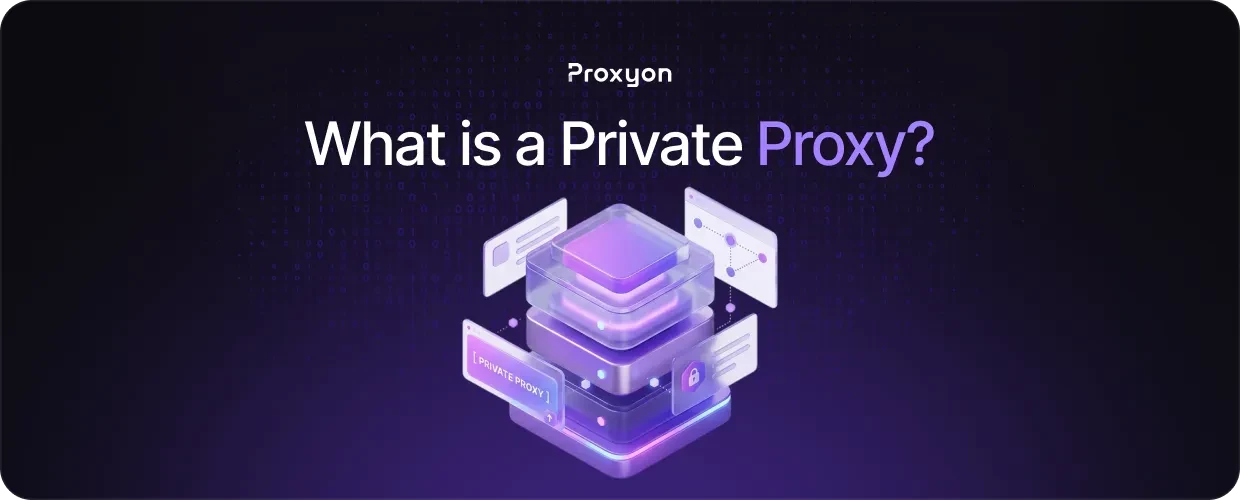
A private proxy gives you a dedicated IP address that no one else shares or uses at the same time. Unlike shared proxies where multiple users route traffic through the same IP, a private proxy is exclusively yours, which means better performance, more consistent speeds, and a significantly lower chance of getting blocked because someone else misused the IP before you. They are a go-to choice for tasks that require reliability, such as account management, sneaker copping, and high-frequency web scraping.
In this article, we'll explore what private proxies are, how they work, and when it actually makes sense to use them.
How Private Proxies Work

When you connect through a private proxy, your requests go through a dedicated IP assigned exclusively to you. The target website sees that IP instead of your real one, and since no one else is using it, there is no risk of it being flagged due to someone else's activity.
Most providers give you access through a username and password, along with a host address and port. Some providers, including Proxyon, also support IP whitelisting, where you authenticate by your real IP instead of credentials, which simplifies the setup further.
Private proxies can be either datacenter or residential. Datacenter private proxies are fast and cheap, but easier for websites to detect. Residential private proxies use IPs tied to real households, making them far harder to block, though they cost more.
Also Read: What is an Anonymous Proxy and When Do You Need One
Private Proxies vs Shared Proxies

The core difference is exclusivity. With a shared proxy, the same IP is used by multiple people at the same time, and if someone else sends aggressive requests or violates a site's terms, the IP gets flagged, and you pay the price for it.
A private proxy eliminates that problem. The IP is yours alone, so its reputation depends only on how you use it. This translates to better uptime, more consistent speeds, and fewer unexpected blocks mid-session. For anything that requires a clean, reliable IP, such as managing accounts, automating purchases, or scraping aggressive targets, the cost difference over shared proxies is worth it.
When to Use a Private Proxy
Private proxies make the most sense when consistency and IP reputation matter. Account management is the clearest example, whether across social media, e-commerce platforms, or any service that flags multiple logins from the same IP. Sneaker copping is another, since retail sites actively block suspicious traffic during drops, and a pre-flagged shared IP will get you nowhere.
For web scraping, private proxies work best against targets that track IP behavior over time. A consistent IP that behaves like a normal user is harder to flag than a rotating one appearing from a new location on every request.
Also Read: Rotating Residential Proxies Explained
Final Words
Private proxies are the right choice when you need an IP that is clean, stable, and entirely under your control. If your use case involves account management, high-stakes automation, or aggressive targets, they are worth the extra cost. Proxyon offers both datacenter and residential private proxies with no subscription required.