


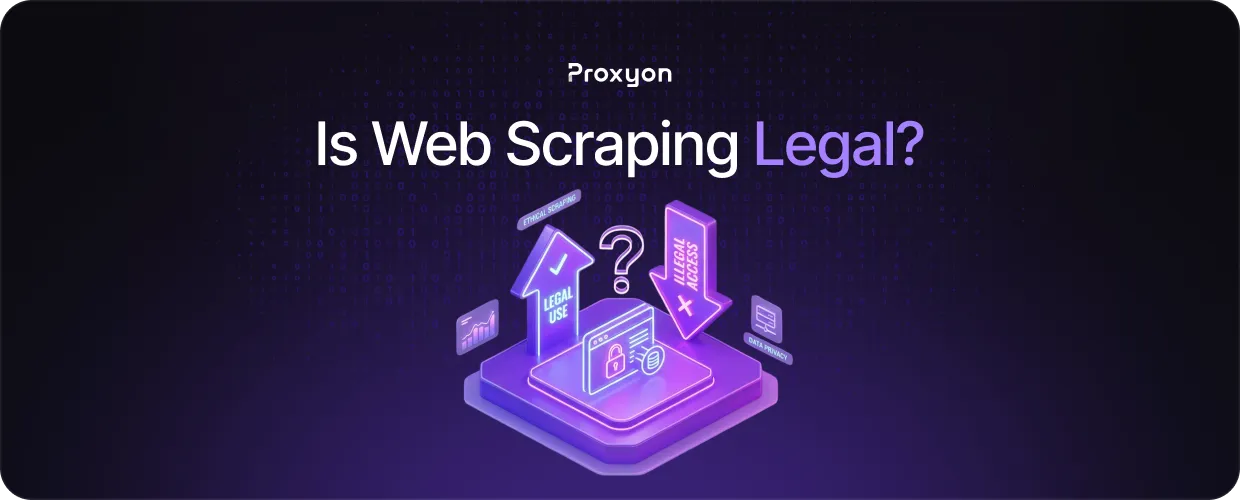
Web scraping sits in a legal gray area that confuses a lot of people. The short answer is that it depends on what you are scraping, how you are doing it, and what you plan to do with the data. Scraping publicly available information is generally accepted, but bypassing access controls, collecting personal data, or violating a site's terms of service can change that quickly. Courts in different countries have ruled differently, and the law is still catching up with the technology.
In this article, we'll explore where the legal lines are drawn, what the major court cases say, and how to scrape responsibly without putting yourself at risk.
What Makes Web Scraping Legal or Illegal
Whether web scraping is legal comes down to three factors: what data you are collecting, how you are accessing it, and what you do with it afterward.
Scraping publicly available data, like product prices, job listings, or news headlines, is generally legal. Courts have repeatedly upheld the right to collect information that anyone can access without logging in. The landmark hiQ v. LinkedIn case established that scraping public data does not violate the Computer Fraud and Abuse Act, since no unauthorized access is involved.
The line gets crossed when you scrape data behind a login, bypass technical restrictions like CAPTCHAs, or collect personal data protected under GDPR or CCPA. Reproducing copyrighted content at scale is another area that can create legal exposure, even from publicly accessible sources.
Also Read: How to Scrape Zillow Data
Major Court Cases That Shaped the Law
A few key cases have defined how courts treat web scraping.
hiQ v. LinkedIn is the most cited. LinkedIn tried to block hiQ from scraping its public profiles, but the Ninth Circuit ruled that scraping publicly available data does not constitute unauthorized access under the CFAA. A significant win for the scraping industry.
Ryanair v. PR Aviation took a different angle. The European Court of Justice ruled that when a site's terms of service explicitly prohibit scraping, users who agreed to those terms can be held to them, even for public data. This is why terms of service carry more legal weight in Europe than in the US.
Facebook v. Power Ventures went the other way. Power Ventures scraped Facebook user data after users gave consent, but the court ruled against them because they continued after receiving a cease-and-desist. Ignoring a formal legal notice is what turned it into a CFAA violation.
How to Scrape Without Legal Risk
Staying on the right side of the law mostly comes down to common sense.
Stick to publicly available data that does not require authentication. Avoid collecting personal information like names or emails that fall under GDPR or CCPA. Respect the site's robots.txt file and pace your requests, since aggressive scraping can be framed as a denial-of-service attack in some jurisdictions.
Read the terms of service before you start. If you receive a cease-and-desist, stop immediately. Using rotating residential proxies keeps your requests looking like normal traffic and helps you scrape at scale without triggering IP bans. Proxyon offers residential proxies starting at $1.75/GB with no subscription required.
Also Read: How to Scrape Amazon Product Data
Final Thoughts
Web scraping is legal when done right. Stick to public data, avoid personal information, respect access controls, and never ignore legal notices. The technology is not the problem; how you use it is.