


What is a Forward Proxy
A forward proxy sits between your device and the internet. It forwards your request to the target using its own IP, so the target sees the proxy's IP, not yours.
This is what most people mean by "proxy". Residential proxies and datacenter proxies are both forward proxies, used for scraping, geo-targeting, and multi-account management.
Also Read: What is an Anonymous Proxy and When Do You Need One
What is a Reverse Proxy Server
A reverse proxy server intercepts requests before they reach the web servers behind it. Visitors connect to it thinking it is the actual site, and it decides which backend server handles the request.
Site owners use them for load balancing, caching, and SSL termination. Services like Cloudflare run reverse proxies at global scale.
The Key Difference
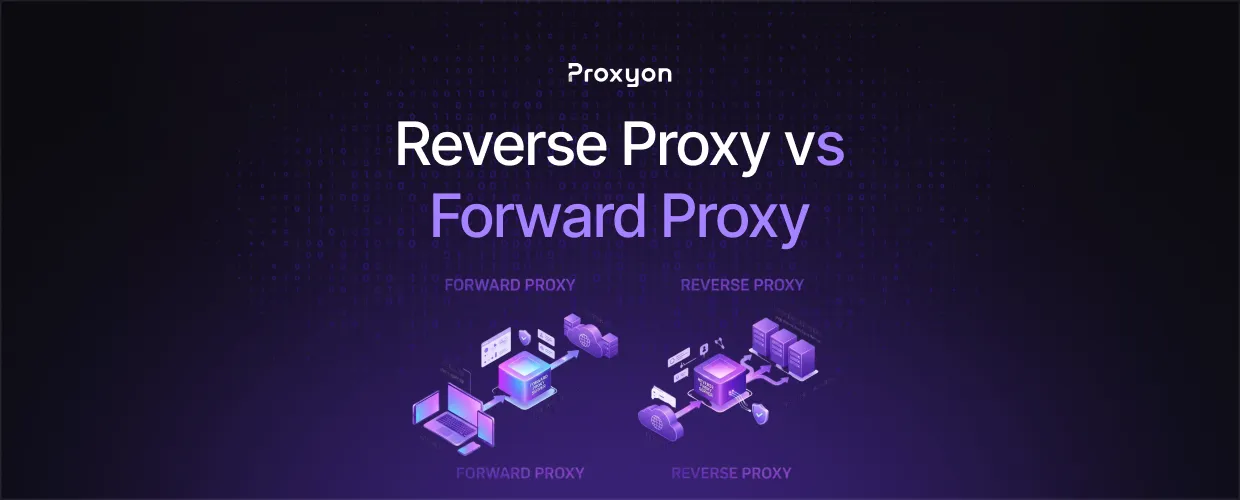
The keyword here is direction. A forward proxy hides the client, and a reverse proxy hides the server. One sends your traffic out from a different IP, the other controls traffic hitting your own site.
Most protected sites sit behind a reverse proxy that inspects requests, as explained in MDN's page on proxy servers and tunneling. Your forward proxy needs to look like a real user to get past it.
Which One Do You Need
Collecting data or accessing geo-restricted content needs a forward proxy. Hosting a service you want to protect or scale requires a reverse proxy server like Nginx or a CDN.
Also Read: What is a Web Scraping Proxy and Why You Need One
FAQ Secton
Is a reverse proxy server the same as a load balancer?
No. Load balancing is one job a reverse proxy can do.
Can a proxy be both forward and reverse?
The software can. Nginx runs in either mode.
Is a VPN a forward proxy?
Close. A VPN routes all device traffic, while a proxy is configured per application.
Do I need a reverse proxy for web scraping?
No. Scraping requires a forward proxy.
Is Cloudflare a reverse proxy?
Yes. It filters and caches traffic before it hits the origin server.
Which is better for anonymity?
A forward proxy. Reverse proxies protect the server side, not the person browsing.
Final Thoughts
A forward proxy hides you, and a reverse proxy server hides the website you are visiting. For scraping, automation, or routing traffic through different IPs, the forward proxy is the answer.