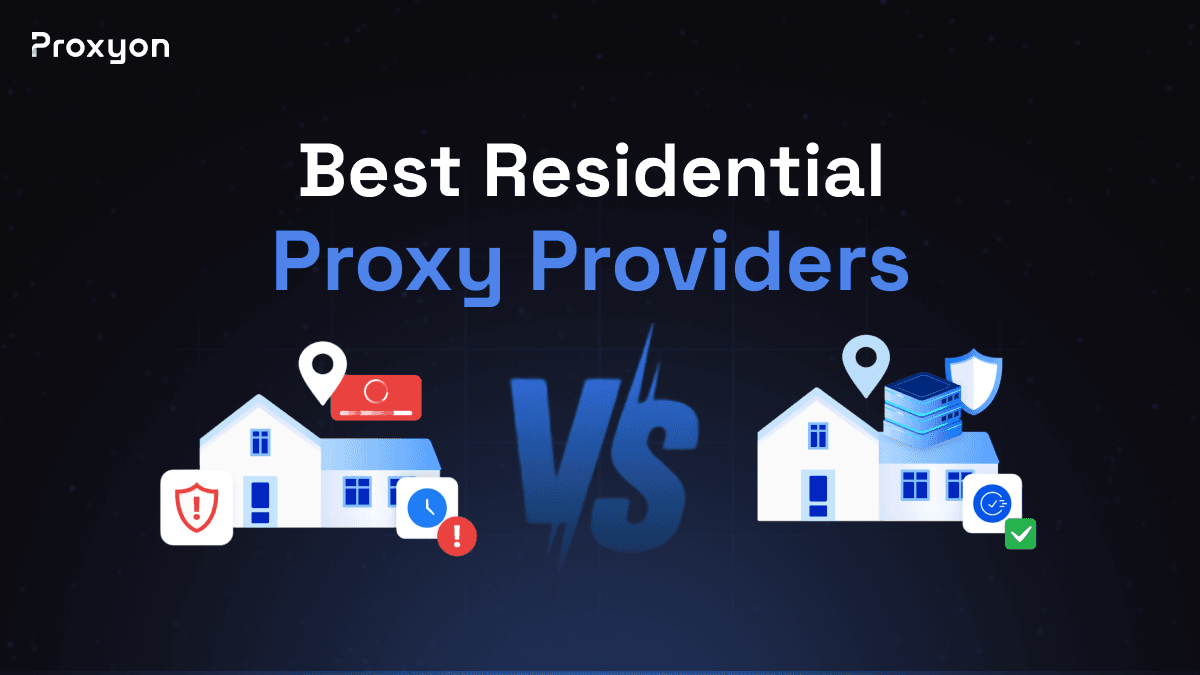
Finding a reliable residential proxy provider is harder than it looks. Most comparison articles just repeat the same top-five lists without actually telling you what separates one provider from another.
Pricing structures vary wildly; some charge per GB, others per IP, and performance depends heavily on pool size, location coverage, and how clean the IPs actually are. Pick the wrong provider, and you end up paying premium prices for IPs that get flagged immediately. In this article, we'll explore the best residential proxy providers in 2026, compared on what actually matters: price and real-world performance.
What to Look for in a Residential Proxy Provider

Before jumping into the list, knowing what actually makes a residential proxy provider worth your money saves you from a bad purchase.
Pool size matters because the more IPs available, the lower the chance of hitting a flagged or reused address. Pricing model is where most people get caught off guard; per-GB works better for web scraping since you only pay for what you use, while per-IP models get expensive fast with frequent rotation. Location coverage is important if your work is geo-specific; you need clean IPs from that region, not exit nodes spread thin across the globe. Success rate and speed tell you whether the proxies actually work under pressure; a cheap provider at 60% success rate costs you more in the long run than a pricier one at 95%. Finally, check rotation control before you commit; some providers only offer automatic rotation, while others let you choose between sticky sessions and rotating IPs.
Top Residential Proxy Providers in 2026

Bright Data is the largest proxy network with over 150 million IPs across 195 countries. It handles high-volume scraping reliably but starts at $8.40/GB, making it better suited for enterprise use than small projects.
Proxyon is the most affordable option at $1.75/GB with no subscription required. Deposit what you need and start immediately, no monthly commitment. Performance holds up well against providers charging four or five times more.
Oxylabs sits in a similar tier with over 100 million IPs and strong performance on heavily protected targets at around $8/GB. Where it stands out is customer support and dedicated account management, a better fit if you need hands-on help getting set up.
Smartproxy lands in the middle ground at around $2.20/GB with over 55 million IPs, a reasonable choice if you want more coverage than budget providers offer without paying enterprise prices.
Which Provider Should You Choose?

If you are running large-scale operations and cost is not the main concern, Bright Data and Oxylabs are the safest picks. For smaller projects or getting started, Proxyon is the most practical option at $1.75/GB with no commitment. Smartproxy works as a middle-ground alternative if you need slightly more coverage.
Most use cases do not require enterprise-level pricing. Start with a budget-friendly provider, test it against your target, and only move up if the results are not good enough.
Final Thoughts
Residential proxies do not have to be expensive. Bright Data and Oxylabs work for enterprise needs, but for most tasks, Proxyon delivers solid performance at a fraction of the cost with no commitment required. Match the provider to your actual needs, and you will not overpay.